
World-class game viewing in a low-impact environment
Botswana is not only a vast country – covering more than 580,000 sq km – but also one of the world’s least densely populated. About 70 per cent of the country is formed by the Kalahari Desert, which extends across Botswana’s central belt.
An astonishing 37 per cent of the nation’s total land area – equivalent to a country the size of New Zealand – has been set aside as national parks, wildlife reserves or wildlife management areas.
In contrast to some other destinations, this lack of population has largely resulted in an absence of human-wildlife conflict with space enough for everyone and room to create some of Africa’s largest and best wildlife reserves.
Moreover, Botswana prides itself on being a low-impact destination, more concerned with strict conservation than pure visitor numbers, and with tight controls over lodge and camp building and extraordinarily high standards of wildlife management.
Forefront
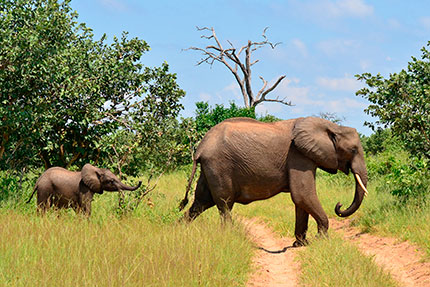
The Department of Wildlife & National Parks (DWNP) has been at the forefront of Botswana’s remarkable conservation record. In fact, it could be said that Botswana has been too successful with its conservation efforts. For example, there are now thought to be about 120,000 elephants in Botswana – the world’s largest elephant population – whereas 50 years ago there were just 8,000. Now the problem is one of too many rather than too few.
Perhaps surprisingly, Botswana has just four national parks but several reserves. That small number is more than offset, however, by their sheer size, by the quality of the visitor experience – and, of course, by the truly spectacular game-viewing:
Chobe National Park: famous for its large animal concentrations. In fact, Chobe and its adjacent reserves probably contain up to 50,000 elephants – easily Africa’s biggest population.
Kgalagadi Transfrontier National Park: straddles the border with South Africa. This extensive park covers a total area of about 38,000 sq km, of which about 75 per cent is within Botswana and was originally known as Gemsbok National Park.
Salt pan
Makgadikgadi Pans National Park: a large salt pan, or series of salt pans, in north-east Botswana. It is a national park because of the uniqueness of the landscape rather than its wildlife.
Nxai Pan National Park: linked to Makgadikgadi Pan National Park and, as its name suggests, a large salt pan.
Botswana’s reserves, some of which are contiguous, vary greatly and from those that are essentially national parks in all but name to areas that are little more than a wildlife centre close to an urban area:
Central Kalahari Game Reserve: the world’s second-largest protected area of its kind, covering 52,800 sq km.
Khutse Game Reserve: popular with visitors because it is close to Gaborone, but the wildlife viewing is underwhelming.
Linyanti Swamp: at about 900 sq km, this area is contiguous with the Selinda Reserve and Namibia’s Mamili National Park. Linyati is hard to reach, but worth the effort. Its two rivers, the Linyanti and the Kwado, help create the marshy landscape.
Mashatu Game Reserve: located in the Northern Tuli Game Reserve bordering South Africa and famed for its Pete’s Pond waterhole.
Mokolodi Nature Reserve: more of a sanctuary than a reserve, like Khutse Mokolodi, this privately administered reserve is close to Gaborone and covers an area of just 30 sq km. The reserve is well stocked with animals, including white rhino.
Moremi Wildlife Reserve: a well-run area of about 5,000 sq km close to Maun on the eastern side of the Okavango with good animal concentrations.
Okavango Delta: Botswana’s greatest natural feature and the world’s largest inland delta.
Savuti Channel/Savute Marsh (10,878 sq km): the Savuti Channel is an erratic water course that began to flow again in 2010 and may stop again at any moment. The channel feeds the Savute Marsh, particularly rich in game at certain times of the year.
Botswana is not only a vast country – covering more than 580,000 sq km – but also one of the world’s least densely populated. About 70 per cent of the country is formed by the Kalahari Desert, which extends across Botswana’s central belt.
An astonishing 37 per cent of the nation’s total land area – equivalent to a country the size of New Zealand – has been set aside as national parks, wildlife reserves or wildlife management areas.
In contrast to some other destinations, this lack of population has largely resulted in an absence of human-wildlife conflict with space enough for everyone and room to create some of Africa’s largest and best wildlife reserves.
Moreover, Botswana prides itself on being a low-impact destination, more concerned with strict conservation than pure visitor numbers, and with tight controls over lodge and camp building and extraordinarily high standards of wildlife management.
Forefront
The Department of Wildlife & National Parks (DWNP) has been at the forefront of Botswana’s remarkable conservation record. In fact, it could be said that Botswana has been too successful with its conservation efforts. For example, there are now thought to be about 120,000 elephants in Botswana – the world’s largest elephant population – whereas 50 years ago there were just 8,000. Now the problem is one of too many rather than too few.
Perhaps surprisingly, Botswana has just four national parks but several reserves. That small number is more than offset, however, by their sheer size, by the quality of the visitor experience – and, of course, by the truly spectacular game-viewing:
Chobe National Park: famous for its large animal concentrations. In fact, Chobe and its adjacent reserves probably contain up to 50,000 elephants – easily Africa’s biggest population.
Kgalagadi Transfrontier National Park: straddles the border with South Africa. This extensive park covers a total area of about 38,000 sq km, of which about 75 per cent is within Botswana and was originally known as Gemsbok National Park.
Salt pan
Makgadikgadi Pans National Park: a large salt pan, or series of salt pans, in north-east Botswana. It is a national park because of the uniqueness of the landscape rather than its wildlife.
Nxai Pan National Park: linked to Makgadikgadi Pan National Park and, as its name suggests, a large salt pan.
Botswana’s reserves, some of which are contiguous, vary greatly and from those that are essentially national parks in all but name to areas that are little more than a wildlife centre close to an urban area:
Central Kalahari Game Reserve: the world’s second-largest protected area of its kind, covering 52,800 sq km.
Khutse Game Reserve: popular with visitors because it is close to Gaborone, but the wildlife viewing is underwhelming.
Linyanti Swamp: at about 900 sq km, this area is contiguous with the Selinda Reserve and Namibia’s Mamili National Park. Linyati is hard to reach, but worth the effort. Its two rivers, the Linyanti and the Kwado, help create the marshy landscape.
Mashatu Game Reserve: located in the Northern Tuli Game Reserve bordering South Africa and famed for its Pete’s Pond waterhole.
Mokolodi Nature Reserve: more of a sanctuary than a reserve, like Khutse Mokolodi, this privately administered reserve is close to Gaborone and covers an area of just 30 sq km. The reserve is well stocked with animals, including white rhino.
Moremi Wildlife Reserve: a well-run area of about 5,000 sq km close to Maun on the eastern side of the Okavango with good animal concentrations.
Okavango Delta: Botswana’s greatest natural feature and the world’s largest inland delta.
Savuti Channel/Savute Marsh (10,878 sq km): the Savuti Channel is an erratic water course that began to flow again in 2010 and may stop again at any moment. The channel feeds the Savute Marsh, particularly rich in game at certain times of the year.

Hospitality & Tourism Association of Botswana
Tel: +267 395 7144
Fax: +267 390 3201
Email: hatabpublicaffairs@hatab.bw
Newtown, Pumpkin Patch Offices
Tel: +267 686 0143
Cell: +267 7135 0954
Email: hatabbookings@ngami.net
HATAB campsites are solely reserved for HATAB Mobile Safari Operators registered in Botswana. For more information with regards to bookings please click here.
Join today and enjoy the many benefits of being a HATAB member. For more details click here.
If you are interested in advertising on this website, please Email us or call: +267 395 7144
Subscribe to our newsletter and get exlusive first minute offers straight into your inbox.
Hospitality & Tourism Association of Botswana
Tel: +267 395 7144
Fax: +267 390 3201
Email: hatabpublicaffairs@hatab.bw
Newtown, Pumpkin Patch Offices
Tel: +267 686 0143
Cell: +267 7135 0954
Email: hatabbookings@ngami.net
If you are interested in advertising on this website, please Email us or call: +267 395 7144
Subscribe to our newsletter and get exlusive first minute offers straight into your inbox.
